Activities
The Sacrament of Marriage
The Sacrament of Marriage is a sign of the unity between Jesus Christ and the Church. It grants spouses the grace to love each other with the same love that Jesus Christ has for His Church.
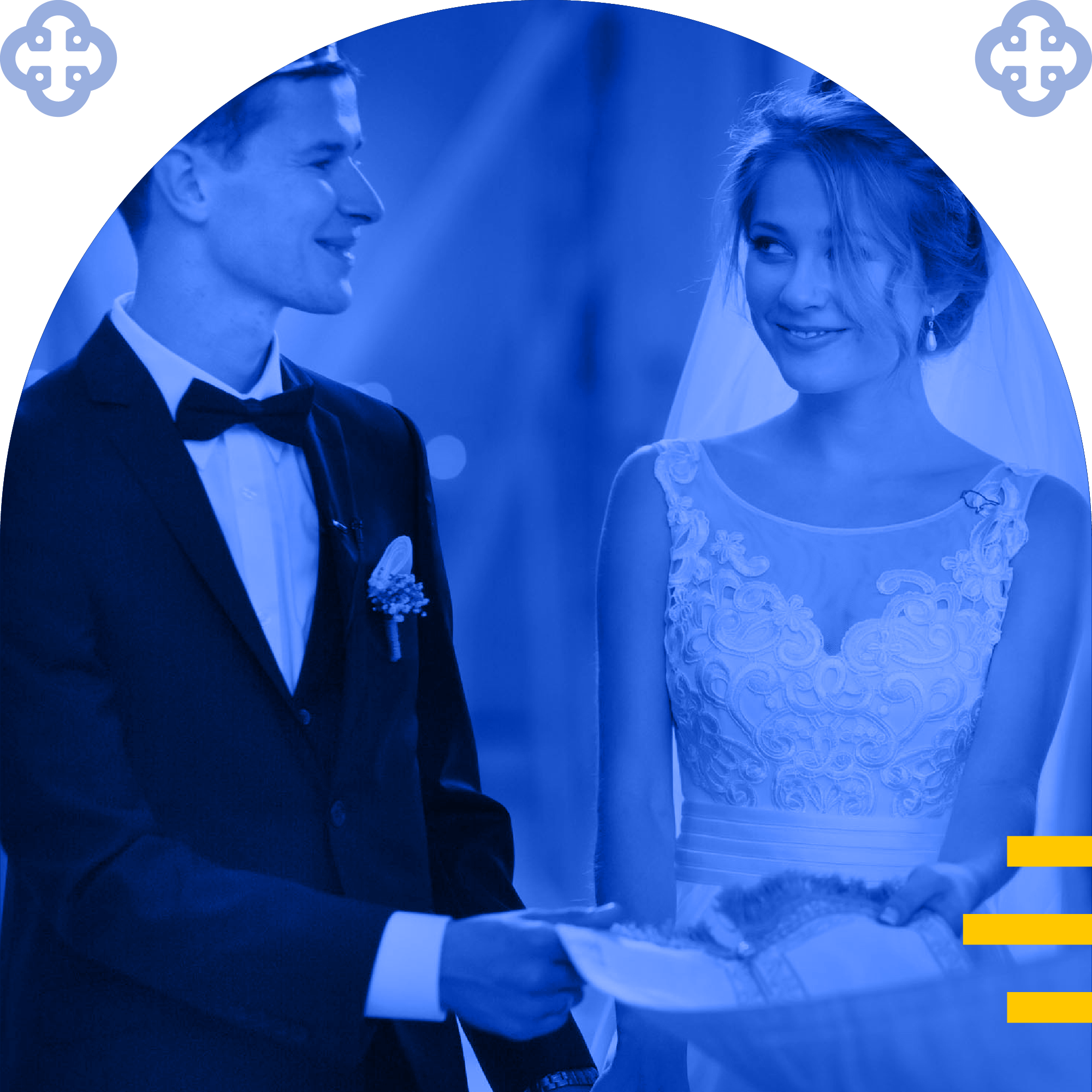
The marriage must be registered with the responsible priest at least three months before the planned date.
The immediate preparation for marriage consists of nine meetings, which can be completed even over a single weekend based on an agreement between the engaged couple and the parish priest.
The engaged couple is encouraged to review their fundamental religious knowledge and prepare spiritually for marriage through regular personal prayer and participation in Sunday Mass at the church. A church registry is created, which is valid solely for ecclesiastical purposes. Baptized individuals must bring their baptismal certificate.
If one of the engaged persons is not baptized or is not Catholic, a dispensation must be requested from the diocesan office for a church wedding. In such cases, the engaged couple must sign a declaration in which the Catholic party commits to doing everything possible to ensure that any children born from the marriage are baptized and raised in the Catholic faith. The non-Catholic party must sign to confirm awareness of their partner’s obligations.
At the appropriate civil registry office, the civil marriage registration must be completed no later than two weeks before the wedding, on designated office days. A valid ID card and birth certificate are required. The engaged couple must appear together at the registry office. The completed civil marriage registration form must then be submitted to the priest at the next meeting.
On the first working day after receiving the Sacrament of Marriage, the signed civil marriage certificate is submitted to the registry office, where the newlyweds can request an official confirmation of their marriage.
The Sacrament of Baptism and Chrismation
Holy Baptism is the foundation of the entire Christian life, the gateway to life in the Spirit, and the door that opens access to the other sacraments. Through Baptism, we are freed from sin, reborn as children of God, become members of Christ, are incorporated into the Church, and share in its mission. /CCC 1213/
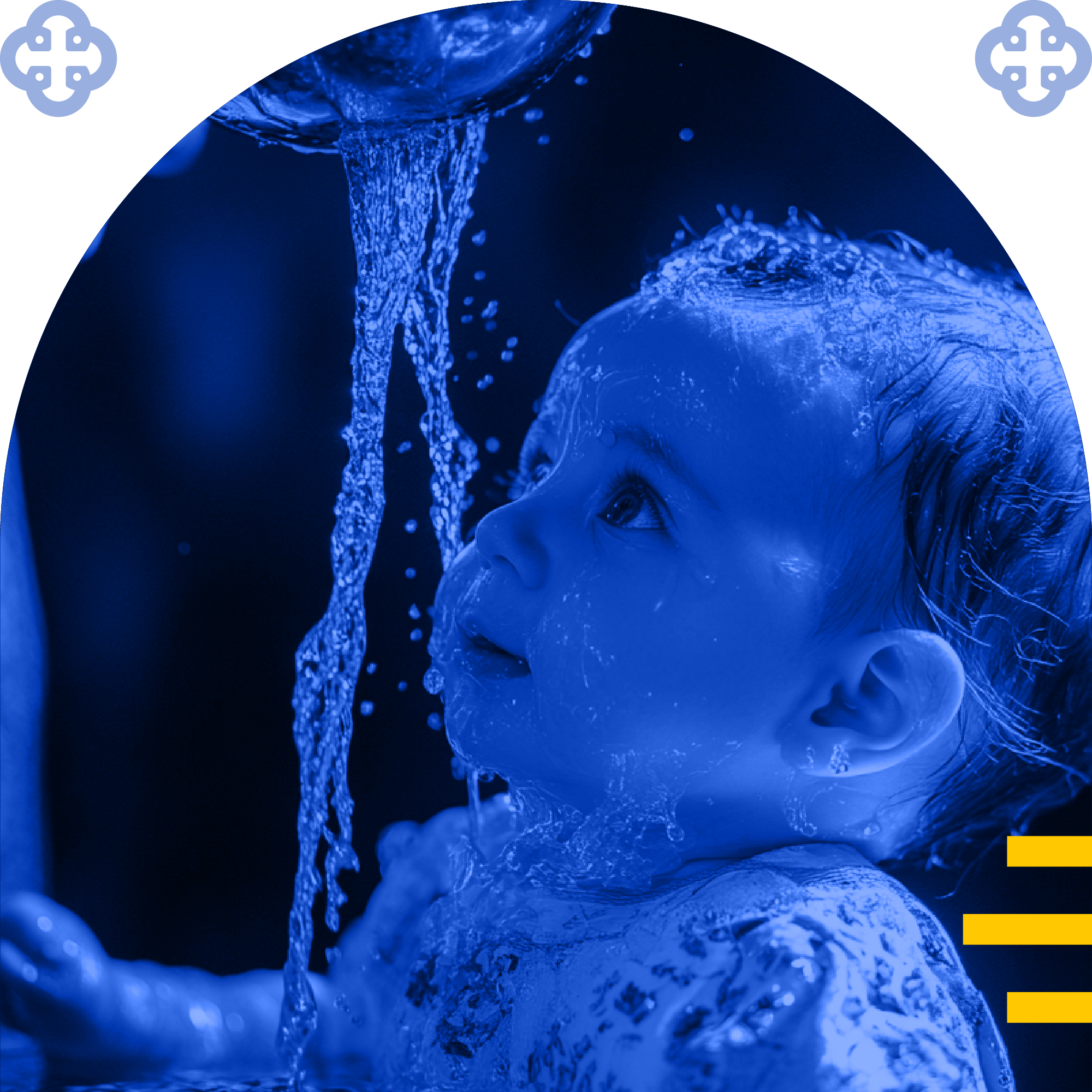
Parents are obliged to see to it that children are baptized in the first weeks; as soon as possible after birth, or even before, they are to contact the parish priest to ask for the sacrament for the child and to prepare themselves properly for it. /CCC 867/
It is possible to request the Sacrament of Initiation before the mother gives birth, and the date for the Sacrament of Initiation is already arranged at that time. It is also possible to have this meeting after the baby is born. It is necessary to bring to this meeting:
- A photocopy of the child's birth certificate
- The baptismal certificate of at least one of the child's Greek Catholic parents
- Confirmation of the godparents of the reception of the sacraments of initiation or marriage - The current Church law (c. 685 § 1 CCEO) establishes the conditions for the valid acceptance of the role of godparent
The completion of the reception of the Sacraments of Initiation is the Rite of "Induction into the Church", which takes place at the beginning of the following Sunday's Divine Liturgy, at which the Eucharist is also administered to the child. Important note: Recently, the pagan custom of putting a red cord or bracelet on the arm of a child in the naive belief that the child is "protected" by this red cord has been spreading again. Since this is a superstition incompatible with the Christian faith, we strongly urge you to abandon this superstition as well as the practice before you receive Holy Baptism!
Since the beginning of the Church, adult baptism has been most common where the proclamation of the Gospel has only recently begun. The catechumenate (preparation for baptism) has an important place in this case. Since it is an initiation into the faith and into the Christian life, it is meant to prepare for the reception of God's gift in Baptism, Confirmation and the Eucharist. The catechumenate, or the formation of catechumens, is intended to enable them, in response to God's initiative and in union with a definite ecclesial community, to bring to maturity their conversion and their faith. It is the formation of the whole Christian life by which "disciples are united to Christ their Teacher. Therefore, catechumens must be properly initiated into the mystery of salvation and into the moral life according to the Gospel, and by sacred rites to be celebrated in succession, they must be introduced into the life of faith, liturgy and charity of the people of God. The "catechumens" are already united to the Church, already belong to the family of Christ, and not infrequently already live a life of faith, hope and love. "Mother Church already embraces them as her own with love and care." /CCC 1246-124/ The period of preparation for receiving the sacraments of initiation usually lasts one year. If anyone expresses an interest in preparation, this should be reported to the priest as soon as possible. In this way he becomes a catechumen and regularly participates in catechesis. The sacraments of initiation are usually conferred on Holy Saturday (the day before Pascha) and are celebrated by the bishop.
The First Sacrament of Reconciliation
The First Sacrament of Reconciliation with the Solemn Reception of the Holy Eucharist

The holy brothers Cyril and Methodius brought Christianity to Great Moravia from Thessaloniki, Byzantine Greece, in the 9th century. This is how the Byzantine-Greek rite was introduced to our lands. The missionaries translated not only the Holy Scriptures but also the Divine Liturgy and other liturgical books into a language that was understandable to our ancestors.
The Roman Catholic and Greek Catholic Churches cooperate closely and share the same head of the Church on earth, the Roman Pope. Therefore, every Roman Catholic can validly receive the sacraments and participate in Greek Catholic liturgies, and vice versa—every Greek Catholic can validly receive the sacraments and attend Roman Catholic liturgies.
Despite this unity, the two traditions have distinct characteristics that are specific to each Church. The Greek Catholic Church is known for ornately decorated churches, where the iconostasis separates the sanctuary from the faithful. Most Divine Liturgies are sung, they last longer, the faithful make the sign of the cross more frequently, and Holy Communion is received under both species—in the form of Eucharistic bread and wine, which is always understood as the real presence of Christ, His true Body and Blood.
Children receive Holy Communion for the first time as pupils in the third grade of elementary school. However, preparation for this sacrament begins as early as first grade during religious education classes. The administration of the First Holy Communion follows a similar ceremony to that of the Roman Catholic tradition.
With the revival of the original tradition in the Greek Catholic Church, the Holy Eucharist is also administered to small children, starting from the reception of the initiation sacraments (Baptism and Chrismation). This continues until the child reaches the age of moral discernment, when they can distinguish between good and evil. This generally corresponds to the age of eight or nine years, although an earlier age is possible, depending on the judgment of the parents.
After reaching this age, the child begins preparing for their First Sacrament of Reconciliation, which is celebrated together with the Solemn Reception of the Holy Eucharist.
The preparation process begins every year in October and lasts until the date of the celebration. Sometimes, a child may wish to receive First Holy Communion together with their classmates from the Latin rite. In such cases, it is possible to celebrate the sacrament twice—once in the home parish and once in another location.
Sacramentals
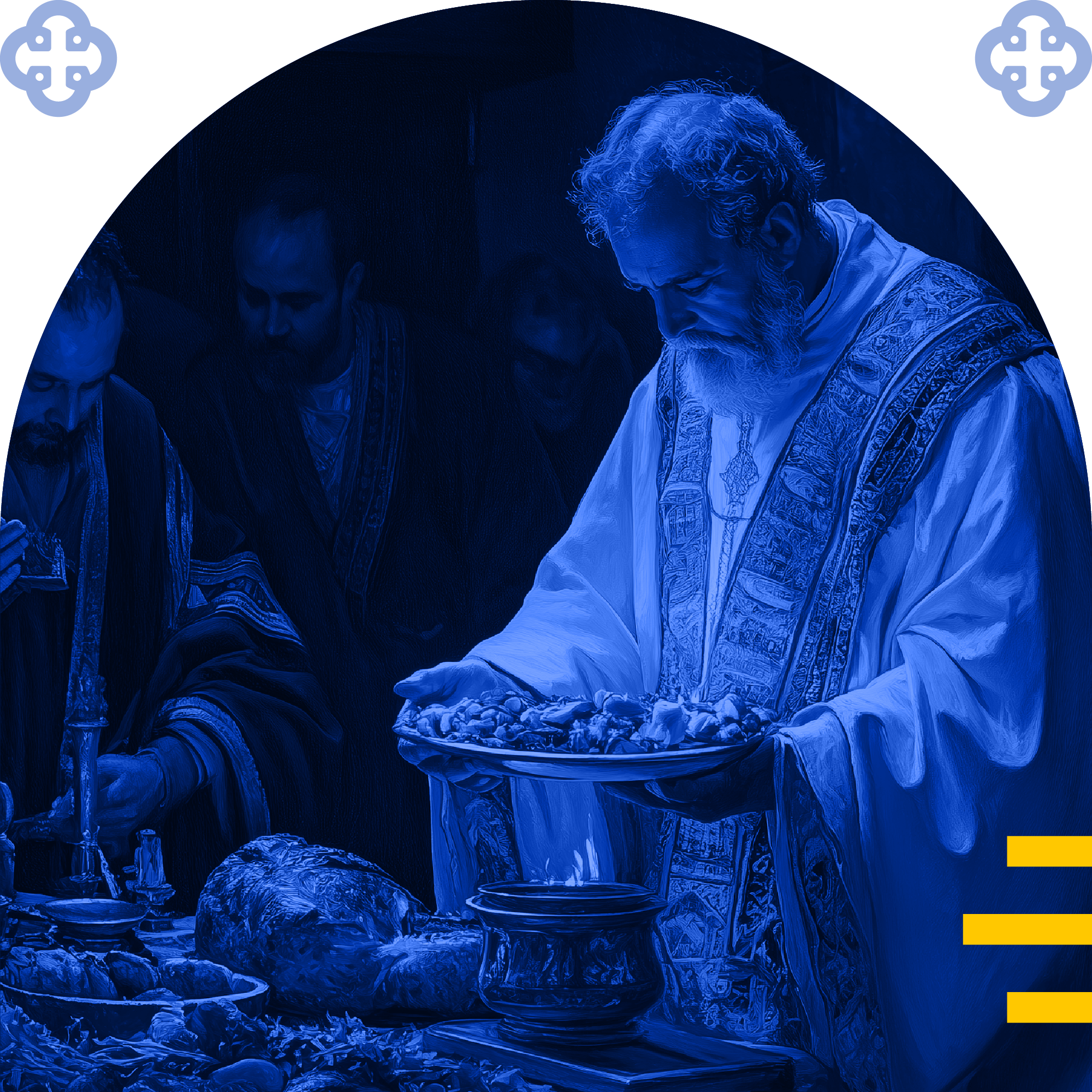
Sacramentals are sacred signs instituted by the Church that sanctify various circumstances of life. They include prayers, often accompanied by the sign of the cross and other symbolic gestures. Among the sacramentals, blessings hold a significant place, as they are acts of praising God and invoking His gifts, as well as dedicating persons and consecrating objects for divine worship. (Catechism of the Catholic Church, 351) Sacramentals prepare people to receive the primary effects of the sacraments and sanctify different aspects of life. (Sacrosanctum Concilium, 60)
- November 21 – Feast of the Presentation of the Most Holy Theotokos in the Temple: Blessing of children
- January – Eve of the Feast of Theophany: “Jordan” water blessing
- January – Feast of Theophany: Blessing of homes
- February 2 – Feast of the Meeting of the Lord: Blessing of candles
- Easter Sunday – Blessing of food
- April 23 – Feast of St. George: Blessing of crops
- August – Exaltation of the Precious and Life-Giving Cross: “Small” water blessing
- August – Feast of the Transfiguration of the Lord: Blessing of the first fruits of the harvest
Funeral Rites
"The Church, which as a mother sacramentally bore the Christian in her womb during his earthly pilgrimage, also accompanies him at the end of his journey to hand him over to the Father's hands." (Catechism of the Catholic Church, 1683)

- Funeral Service Provider – determines the date and time of the funeral
- Registry Office – issues the Death Certificate
- Priest – must be informed of the funeral date set by the funeral service
The funeral must be registered in person. When registering the funeral, it is necessary to present the Medical Death Examination Report issued by a doctor.
Booking system
Take advantage of our online booking system for sacrament bookings.